How Should We Evaluate an AI Agent?
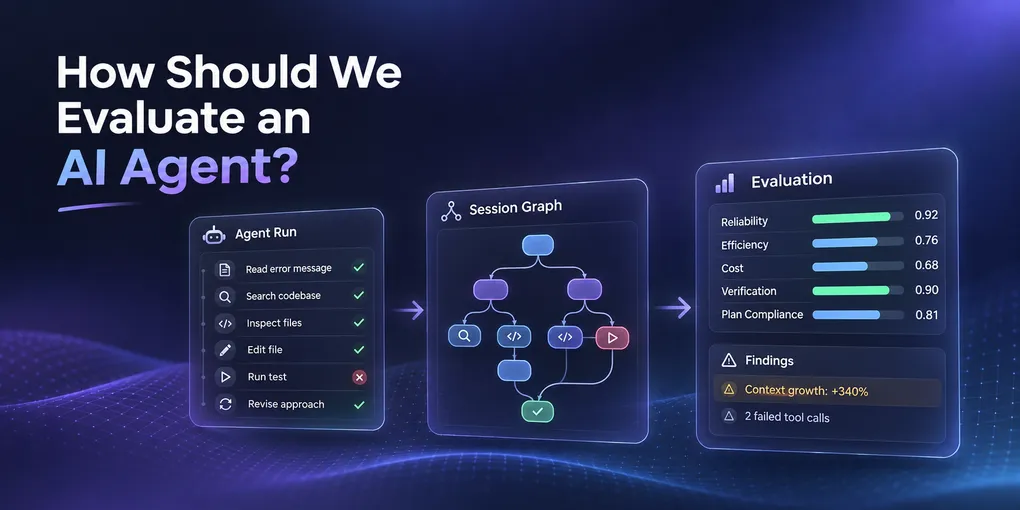
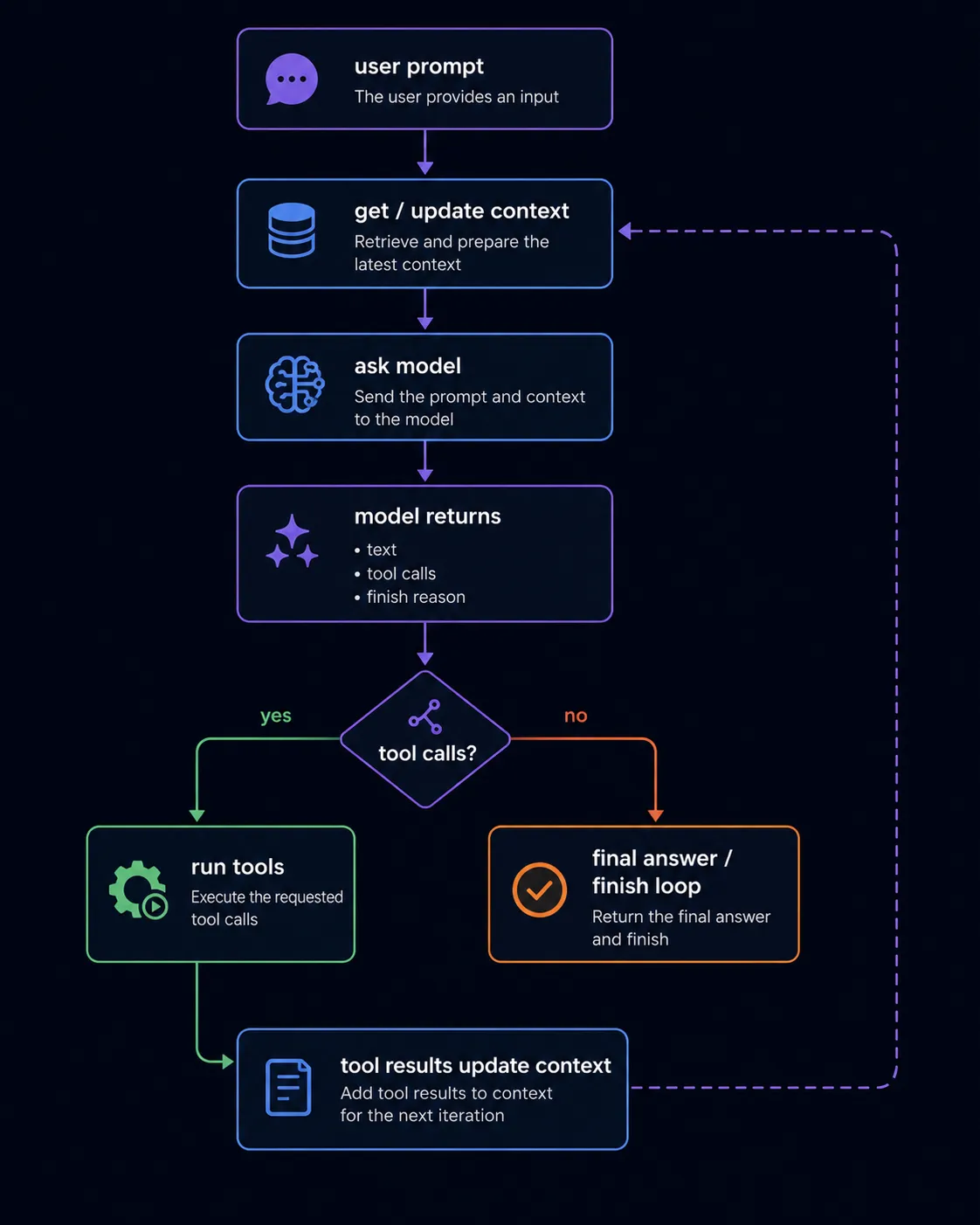
An agent is not just a model answering a question. It is a process. When we ask a coding agent to fix a bug, it may read an error message, search the codebase, inspect related files, call a model again, edit a file, run a test, respond to a failure, and revise its approach. The final answer is only the visible end of that process.
As agents become more capable, the work we give them can grow in size and cost. Two agents can complete the same task while taking very different paths. One may find the relevant code quickly and verify its change. Another may search repeatedly, accumulate a large context, and make several unsuccessful attempts before reaching a similar result. A more capable model may finish with fewer steps but cost more per call. The final result alone does not tell us which approach was more effective, or why.
We need a way to look inside the process. Not just to see what an agent produced, but to understand the work it took to get there.
Evaluating the Process
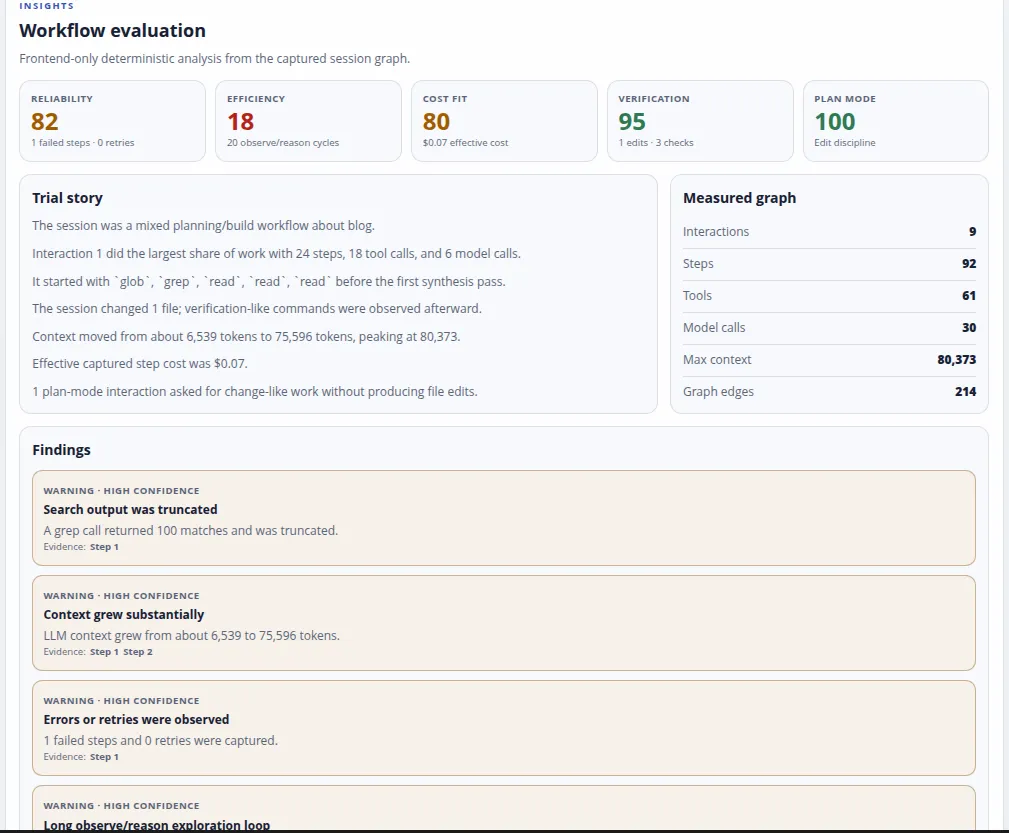
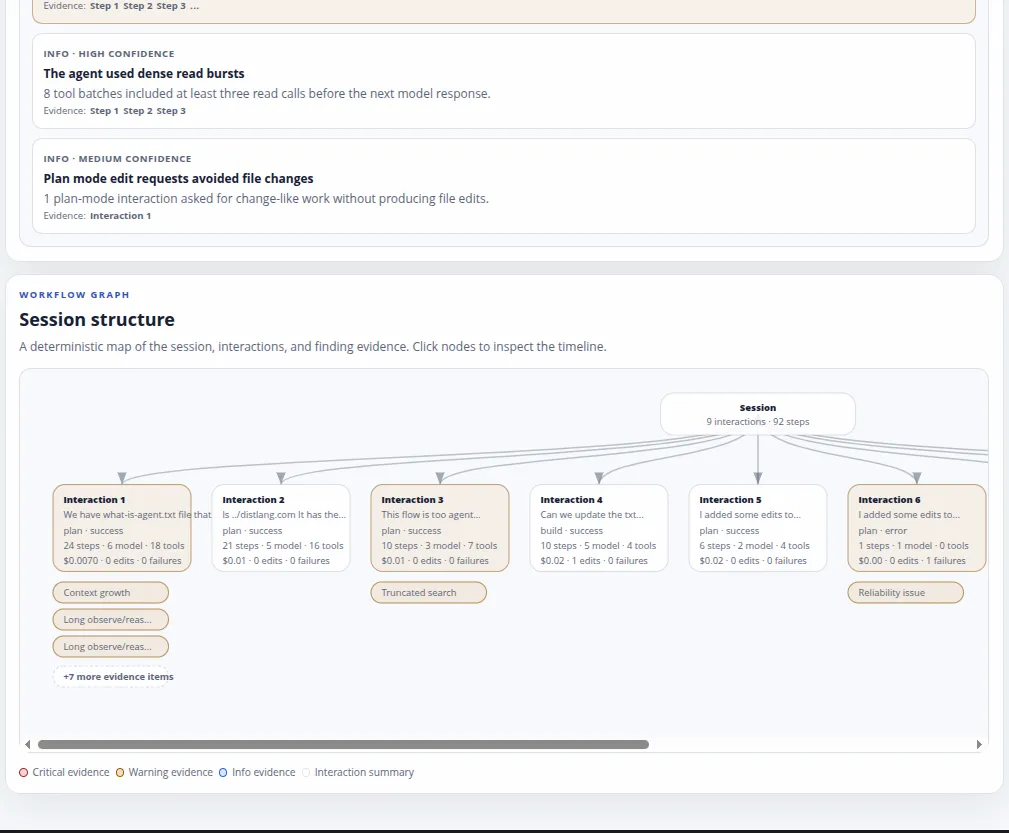
Agent Debugger captures the details of a session and represents it as a graph. The session contains interactions, and interactions contain steps. It’s possible to do static analysis on these graphs traversing the graphs with different goals in mind. For example consider context growth. A model call near the end of a session may carry much more context than one near the beginning. The evaluator compares the recorded context sizes and flags substantial growth according to a defined threshold.
The finding does not mean that the extra context was necessarily wasteful. A difficult task may need a large amount of information. Similarly, a failed tool call may be part of a reasonable investigation, and a verification-like step in the trace does not prove that a change is correct. These are signals about captured behavior, not a complete understanding of the task.
The evaluator also produces scores for dimensions such as reliability, efficiency, cost, verification, and plan compliance. Those scores come from rules we have chosen. They are useful as a consistent lens for examining a session, but they are not a universal definition of quality. The advantage of these rules is that they are reproducable as each of them are passes on the graphs which will always lead to the same result.
Learning From Compilers
There is a useful analogy here with compilers. A compiler does not need to understand and translate an entire program in one step. It can work through passes, each with a more focused responsibility. Some passes do type checking. Another one might do loop optimizations or macro replacements.
We can think about agent evaluation in a similar way. The captured session is the input. We represent its interactions and steps as a graph, calculate measurements from the recorded events, and apply rules to produce findings and scores. Each stage makes a different part of the session easier to reason about. This separation is important because it makes the evaluation repeatable. Given the same captured session and the same evaluator rules, the deterministic evaluation should produce the same result. If we change the rules, we can version the evaluator and understand that a different result may reflect a different definition of what we are measuring.
Repeatability is not the same as objectivity. A threshold for context growth is still a threshold we selected. A score is still shaped by what we chose to count and how we weighted it. But those choices can be inspected and discussed. We can follow a finding back to its evidence, question the rule, and improve the evaluator without having to guess how it reached its conclusion. Our hope is to over time have a good static analysis tools that can judge the tool evaluation.
Where LLM Judgment Fits
Another way to evaluate an agent is to give its session to an LLM and ask whether the work was good. A model can provide a useful interpretation. Its assessment can change with the judge model, the prompt, the context provided, or the response generated on a particular run. A fast session is not necessarily reliable. A cheap session is not necessarily correct. A longer investigation may be appropriate for a difficult task. Without an explicit evaluation, an LLM may emphasize different tradeoffs each time it is asked.
A timeline or graph lets us move from an assessment to the captured steps behind it. Agent debugger helps see patterns in the way we use an agent and evolve it so that we be better over the long run. Over time, looking at usage across sessions can help us notice recurring patterns and make better choices about prompts, models, and workflows. Fewer prompts are not always better, but understanding where work is repeated can help us avoid unnecessary ones.
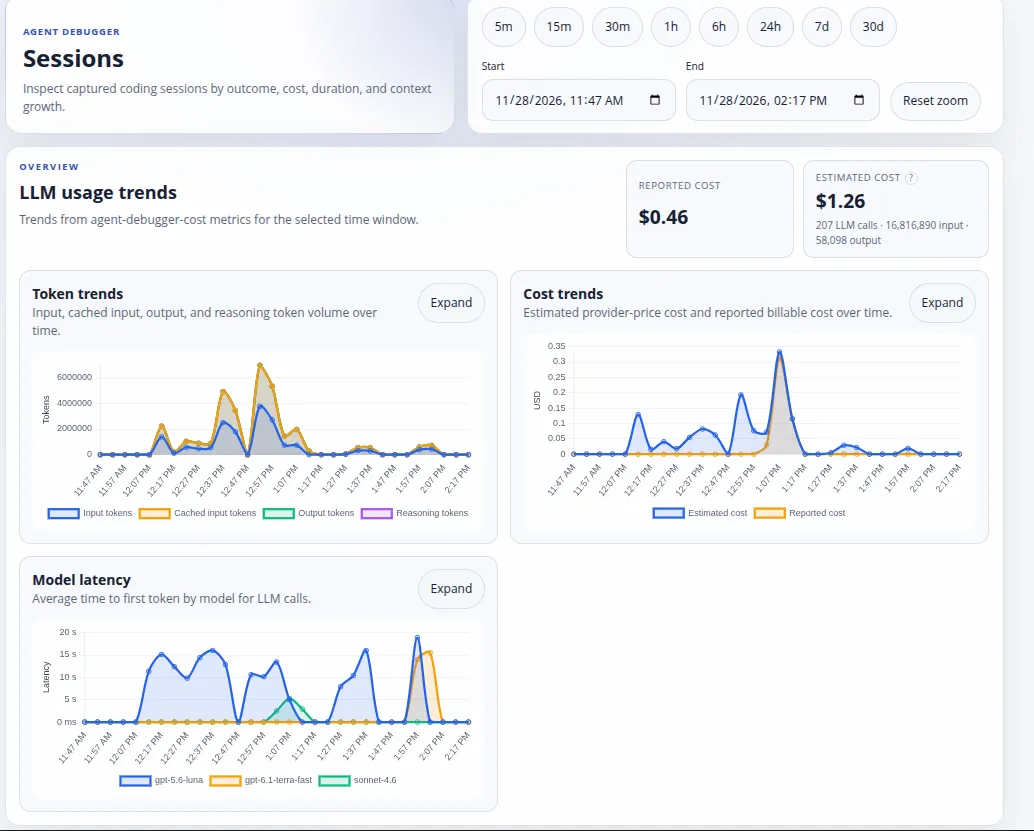
Agent evaluation is still a new domain, evaluations are how they are done right now. The static analysis with agent debugger hopes to give another perspective on how an agenet operates. That is the direction we are exploring with Agent Debugger. We are just getting started.
If you’re interested in trying Agent Debugger, sign up now and connect it to your favorite supported agent. If you have questions, contact me on X.